Headline: Trump Claims Near Completion of Strategic Goals in Iran
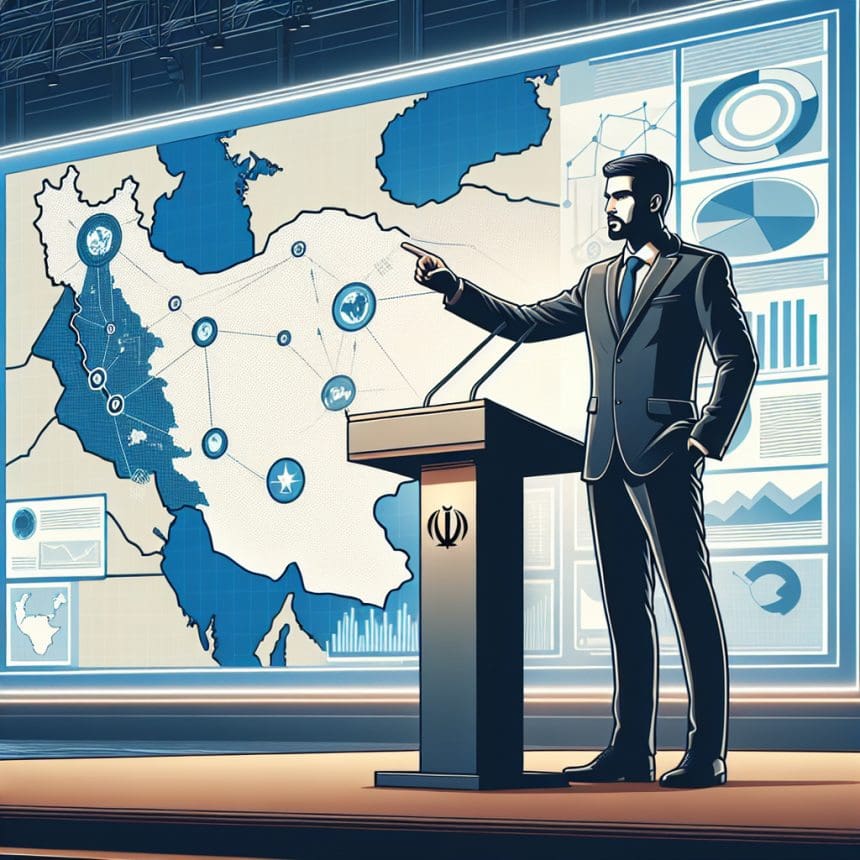
In a recent address, President Donald Trump stated that the United States is nearing the completion of its "core strategic objectives" concerning Iran. Speaking at a press conference held at the White House on Wednesday, Trump emphasized the administration’s commitment to reshaping U.S.-Iran relations, although he refrained from providing a specific timeline for these developments. The remarks come amid ongoing tensions between the two nations and heightened scrutiny over U.S. foreign policy in the region.
Trump’s declarations signal a significant moment in U.S.-Iran relations, marked by an escalation of rhetoric and a series of strategic decisions that have defined his presidency. The comments were made in the wake of renewed focus on Iran’s nuclear ambitions and its regional influence, amid ongoing debates in Congress regarding the effectiveness of the administration’s policies.
The administration’s "core strategic objectives" appear to encompass several key areas: curtailing Iran’s nuclear program, limiting its support for proxy militia groups across the Middle East, and addressing human rights abuses within the Iranian regime. While the specifics of these objectives remain somewhat ambiguous, Trump’s assurances suggest a bold approach intended to reshape the balance of power in the region.

Critics argue that the lack of a concrete timeline raises questions about the effectiveness of the current strategy. Senator Elizabeth Warren (D-MA) stated, "Without clear goals and a timeline, we risk losing sight of what it takes to keep our nation safe while navigating such a complex geopolitical landscape." Conversely, supporters of Trump’s policies argue that his administration’s tough stance on Iran has sent a strong message about the U.S. commitment to protect its allies in the Middle East.
Iran has consistently been a focal point of U.S. national security interests, particularly in light of its support for militant groups like Hezbollah and its influence in Iraq, Syria, and Yemen. As concerns over Iran’s nuclear capabilities continue to grow, the stakes of U.S. policy in the region have heightened. Trump’s comments come as diplomatic tensions are rising, with both Secretary of State Mike Pompeo and National Security Advisor John Bolton reiterating the need for a tough approach against Iran.
In reaction to Trump’s remarks, Iranian officials dismissed the notion that U.S. objectives are near completion. "The U.S. has failed to achieve its objectives in the region," said Iranian Foreign Minister Mohammed Javad Zarif. "Sanctions and military pressure have only reinforced our resolve." This counterstatement highlights the ongoing complexities in U.S.-Iran relations, which have been fraught with animosity since the U.S. withdrew from the Iran nuclear deal in 2018.
Analysts suggest that the timing of Trump’s comments may be strategically linked to rising domestic pressures on the administration. With the presidential election on the horizon, the administration appears intent on demonstrating strong leadership in foreign policy as part of its re-election platform. As Trump faces challenges on various fronts—including the coronavirus pandemic, economic uncertainties, and public protests—asserting progress in foreign engagements may play to his base.
The Trump administration’s approach to Iran has also been marked by a shift away from traditional diplomatic norms. The imposition of sweeping sanctions, alongside the withdrawal from the nuclear agreement known as the Joint Comprehensive Plan of Action (JCPOA), has fundamentally altered the landscape of U.S.-Iran relations. Critics warn that this strategy risks further isolating the U.S. from its European allies, who remain committed to the JCPOA, complicating coordinated efforts to address Iran’s activities.
In the wake of Trump’s comments, some lawmakers are advocating for a more collaborative approach. Bipartisan discussions in Congress have focused on the importance of engaging with international partners in a cohesive strategy toward Iran. Representative Adam Schiff (D-CA) remarked, "The ongoing crisis in Iran cannot be addressed through unilateral action alone. We need a concerted effort along with our allies to find a sustainable solution."
As Iran continues to navigate international pressures, its actions in the region are being watched closely. The potential for military conflicts remains a significant concern, particularly with U.S. military assets stationed in the Middle East. The administration’s firm stance suggests that options on the table could escalate tensions even further, as it seeks to project strength.
International observers are equally cautious. The coming months may see further involvement of regional players like Saudi Arabia and Israel, who have voiced their concerns alongside the U.S. regarding Iran’s ambitions. As negotiations, sanctions, and military posturing move forward, the potential for miscalculations remains high.
In summary, President Trump’s assertion that the U.S. is nearing the completion of its strategic objectives regarding Iran underscores a pivotal moment in a long-standing geopolitical conflict. While critics call for clearer goals and collaborative strategies, supporters maintain that a tough stance is necessary to curb Iran’s influence. The complex dynamics of U.S.-Iran relations continue to evolve, with the implications of these developments resonating in both domestic politics and international relations.
As the situation unfolds, all eyes will remain on the White House for updates on U.S. policy shifts regarding Iran and the broader Middle East. With a delicate balance of interests at play, the ramifications of these strategic decisions will likely shape the region for years to come.