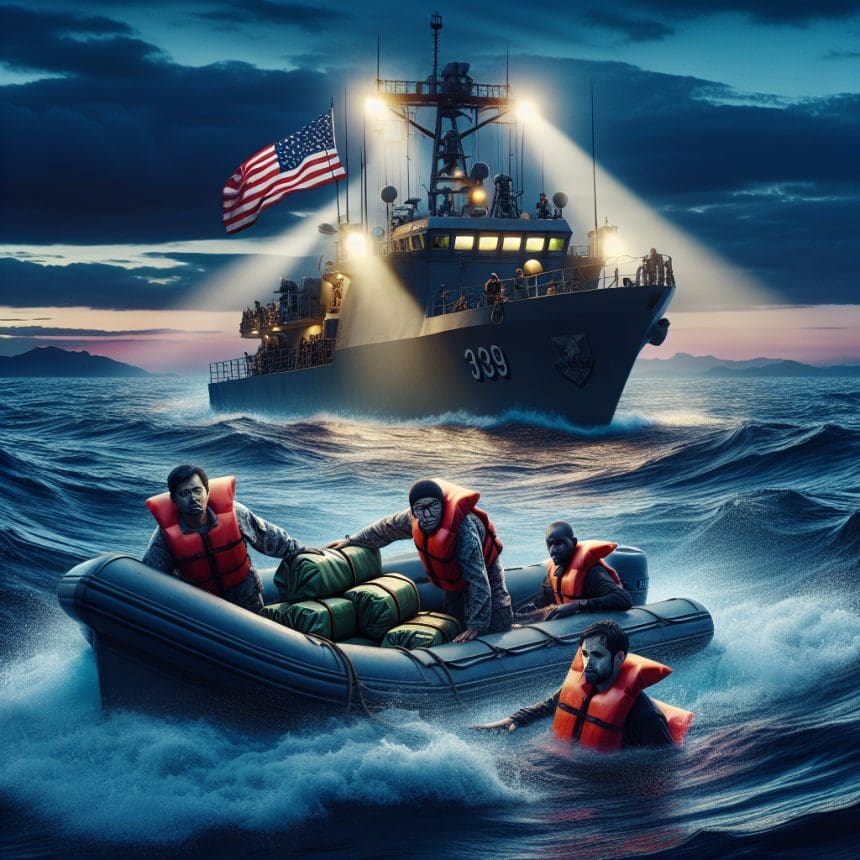
Headline: US Military Engages Drug Traffickers off Pacific Coast
In a decisive operation on October 15, 2023, the U.S. military targeted and struck a narco-trafficking vessel in the Eastern Pacific Ocean, resulting in the survival of three suspects aboard. This action forms part of ongoing efforts to combat the flow of illicit drugs entering the United States and disrupt the operations of drug cartels in the region. The incident took place approximately 200 miles west of Acapulco, Mexico, following intelligence providing insight into a potential trafficking route that has become increasingly active in recent months.
U.S. Southern Command confirmed the engagement, noting that it was a direct response to persistent intelligence regarding the vessel’s role in transporting significant quantities of narcotics. The operation involved collaboration between naval forces and air support, showcasing the military’s commitment to maintaining maritime security and combating drug-related violence.
Defense officials reported that the action was carefully calibrated to minimize risks to civilians, emphasizing that these military operations are undertaken with a strict adherence to international law. The vessel, described as a semi-submersible craft, was identified as a known method employed by drug traffickers to evade detection and maximize the stealth of their operations. The three survivors of the strike have since been taken into custody.

This latest military engagement underscores an alarming trend in the booming narco-trafficking business, propelled by drug demand in the U.S. and other global markets. Experts indicate that cartels are increasingly employing advanced maritime technology to transport drugs undetected. The semi-submersible, similar to those used in this operation, can carry large payloads and navigate deeper waters, making them a favored choice among traffickers.
Prior to the U.S. military strike, surveillance and intelligence operations tracked the vessel’s movements, revealing an affiliation with established drug cartels believed to be linked to the flow of cocaine and methamphetamines into the U.S. In recent years, the U.S. government has intensified efforts to dismantle such networks, with a particular focus on maritime routes that pose substantial challenges for law enforcement agencies.
The Eastern Pacific has become a critical flashpoint for narco-trafficking, with reports indicating that drug shipments in the region have steadily increased over the past decade. In response, the U.S. has reinforced its naval presence and frequently collaborates with partner nations in drug interdiction efforts aimed at disrupting cartel operations.
Critics of military operations argue that without addressing the root causes of drug trafficking, such as poverty and violence in source countries, these interventions may only provide temporary relief. They advocate for a more comprehensive approach to drug policy that includes diplomatic efforts and economic support for affected regions.
Nonetheless, military officials maintain that measures like these are integral to safeguarding U.S. borders and dismantling the infrastructure that enables drug trafficking. The U.S. has historically viewed its role in countering narco-trafficking as essential to national security, particularly in light of the opioid crisis that has claimed thousands of lives in recent years.
In addition to military operations, U.S. authorities are becoming increasingly vigilant through intelligence-sharing with Central and South American nations. Collaborative efforts have proven valuable across multiple fronts, with agencies such as the Drug Enforcement Administration (DEA) and U.S. Coast Guard actively working with their foreign counterparts to thwart maritime drug trafficking.
Reports suggest that the latest engagement may herald a new phase in U.S. military strategies against drug trafficking. With sophisticated surveillance technologies and rapid-response naval units, authorities are consistently refining their ability to identify and intercept drug shipments before they reach U.S. shores.
As the operation’s details continue to emerge, analysts predict that this will not only have implications for ongoing military engagements but will also influence policy discussions surrounding drug enforcement strategy and collaboration in the Americas. The rise of methodical and resourceful trafficking attempts has given urgency to these conversations, emphasizing the need for an adaptive and multi-faceted approach to drug interdiction.
Meanwhile, communities affected by the narcotics crisis await the long-term effects of such military interventions. Survivors of drug-related violence and addiction continue to advocate for comprehensive reforms that prioritize public health measures alongside traditional law enforcement tactics. They argue that establishing programs focused on prevention, treatment, and rehabilitation is vital for reducing the long-term impact of narcotics on society.
Looking ahead, U.S. officials are likely to use the October 15 operation as a case study to improve future military strategies and multinational drug enforcement policies. As discussions move forward, the challenge remains for the U.S. and its regional partners to strike a balance between military action and community-based solutions to address the root causes of drug trafficking.
The episode off Acapulco serves as a reminder of the complex realities surrounding narco-trafficking and the continual need for vigilance. As the U.S. military reaffirms its commitment to disrupting drug trafficking operations in the Eastern Pacific, advocates for a holistic approach to drug policy continue to stress the importance of understanding and addressing the socio-economic factors that contribute to this ongoing, challenging issue.
In conclusion, as military operations against drug traffickers escalate, the emphasis on cooperation, technological advancement, and strategic planning will become increasingly essential in the battle against the ever-evolving landscape of international narcotics trafficking. With challenges ahead, both in the maritime context and on land, stakeholders must remain adaptive and committed to achieving sustainable solutions.