

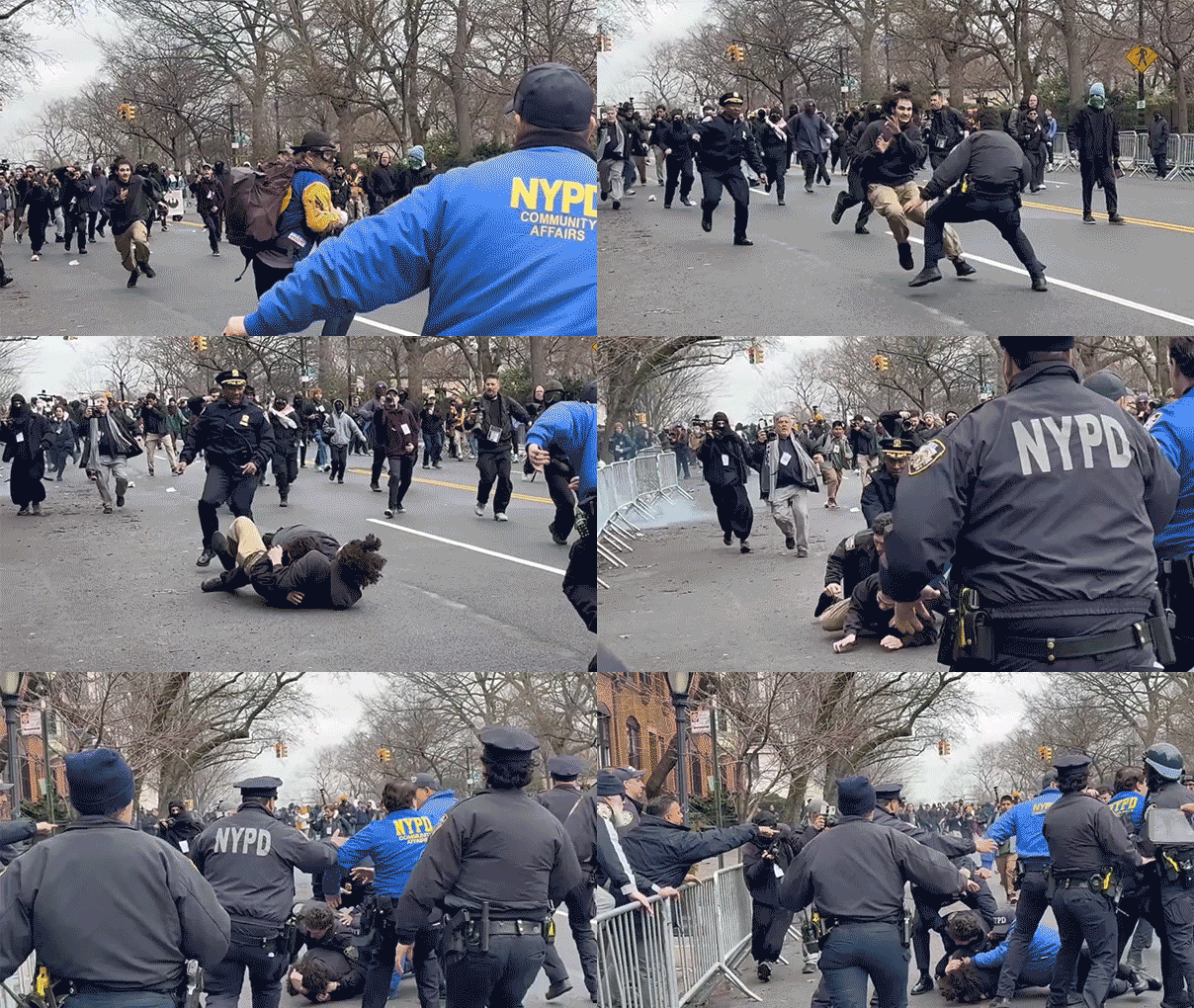
Headline: NYC Terror Suspect Tackled After Alleged Bomb Attack
In a shocking turn of events, a man suspected of attempting to detonate an explosive device at a protest in Lower Manhattan was apprehended Sunday afternoon by quick-thinking bystanders. The incident occurred during a peaceful demonstration advocating for social justice, drawing considerable media attention and igniting discussions about public safety during such events. Eyewitness footage captured the moment the suspect allegedly threw the bomb, leading to chaos as attendees rushed to subdue him before police arrived.
The dramatic encounter unfolded near City Hall as participants gathered for a protest organized to promote racial equality and civil rights. Around 2:00 PM, the atmosphere was charged but peaceful, until the suspect allegedly threw a device toward the crowd, prompting panic among attendees. Bystanders quickly recognized the gravity of the situation and sprang into action, overpowering the suspect before he could escape.
Witnesses reported hearing a loud bang associated with the suspect’s device, which fortunately did not detonate. “It was terrifying; I thought I was going to die,” recounted one protester, who asked to remain anonymous. “The next thing I knew, people were launching themselves at him, trying to prevent any further harm.” Authorities confirmed that the device was indeed capable of causing significant damage but was rendered harmless before it could explode.
The quick response from bystanders has been commended by local law enforcement officials. “The bravery exhibited by these individuals potentially saved lives,” commented Officer Jessica Rivera of the NYPD. “Their swift action allowed us to secure the area and apprehend a suspect potentially planning a heinous act.”
As details surrounding the suspect’s motives continue to unfold, investigators have turned their attention to links between the protest and the individual’s background. Preliminary reports indicate that the suspect, identified as 34-year-old Marco Vasquez, has a history of criminal behavior and previously expressed radical views online. Authorities are currently assessing whether the protest was targeted due to its political nature, which may have fed into Vasquez’s motivations.
The protest was organized by various community groups committed to advocating for underrepresented voices in political discourse. Prominent speakers were addressing crowds when the situation escalated. This alarming event raises essential questions about safety at public demonstrations and how local agencies handle potential threats.
City officials have responded to the situation by increasing security measures at future protests. Mayor Eric Adams stated in a press conference, “New Yorkers have the right to protest freely without fear of violence. We will amplify our efforts to protect our citizens and ensure safety at these events.”
The incident sparked a broader conversation about the intersection of public protests and domestic terrorism. Social media platforms erupted with discussions about the potential risks activists face in today’s charged political climate. Many expressed gratitude for those who intervened, while others called for more robust protective measures for peaceful demonstrations.
Analysts have pointed out that such incidents may have a deterrent effect on public participation in future protests. “While freedom of speech is a fundamental right, fear can prevent people from exercising that right,” noted Dr. Melissa Chen, a political analyst specializing in civil rights issues. “The isolated actions of one individual can overshadow the voices of many who wish to advocate peacefully.”
Responses from social media users vary across the spectrum. Many voiced their support for the protest and raised awareness regarding components of systemic racism and inequality. Others have voiced concerns over safety, suggesting that more drastic measures should be implemented to mitigate such risks.
Local leaders have highlighted the need for community engagement and education around peaceful protests. Initiatives aimed at training individuals on how to respond in crisis situations could potentially empower citizens and reduce chaos. “Public safety also means public preparedness,” stated community organizer Naomi Harris. “We want to create an environment where people feel safe to express their ideas while being ready to face any threats.”
In the aftermath of this incident, numerous local advocacy groups emphasized their continued commitment to non-violent activism. They held an impromptu meeting that evening to discuss how best to ensure the safety of future gatherings and reinforce their message of peace and solidarity amid adversity.
As investigations into the suspect continue, further details are expected to emerge that may clarify the motive behind his actions. Authorities are investigating his online presence to uncover any potential affiliations or extremist views that could shed light on his planning and execution of the assault.
As New Yorkers rally for unity and safety, this harrowing event stands as a stark reminder of the challenges that activists face in today’s polarized climate. The collective response by bystanders at Sunday’s protest exemplifies the solidarity within the community, while also advocating for necessary changes in how public safety is managed at demonstrations.
As the city moves forward, officials and residents alike are on high alert, united in their resolve to create safe spaces for free expression. The upcoming weeks will likely reveal more about the suspect’s intentions, the responses of law enforcement, and the long-term implications for public gatherings in New York City.
The fallout from this attack may have enduring consequences, as advocates continue to call for comprehensive strategies that promote both security and the protection of civil liberties in a bustling metropolis where voices, despite the noise of threats, strive to be heard.