Nordic Leaders Gather in Oslo to Address Arctic Tensions
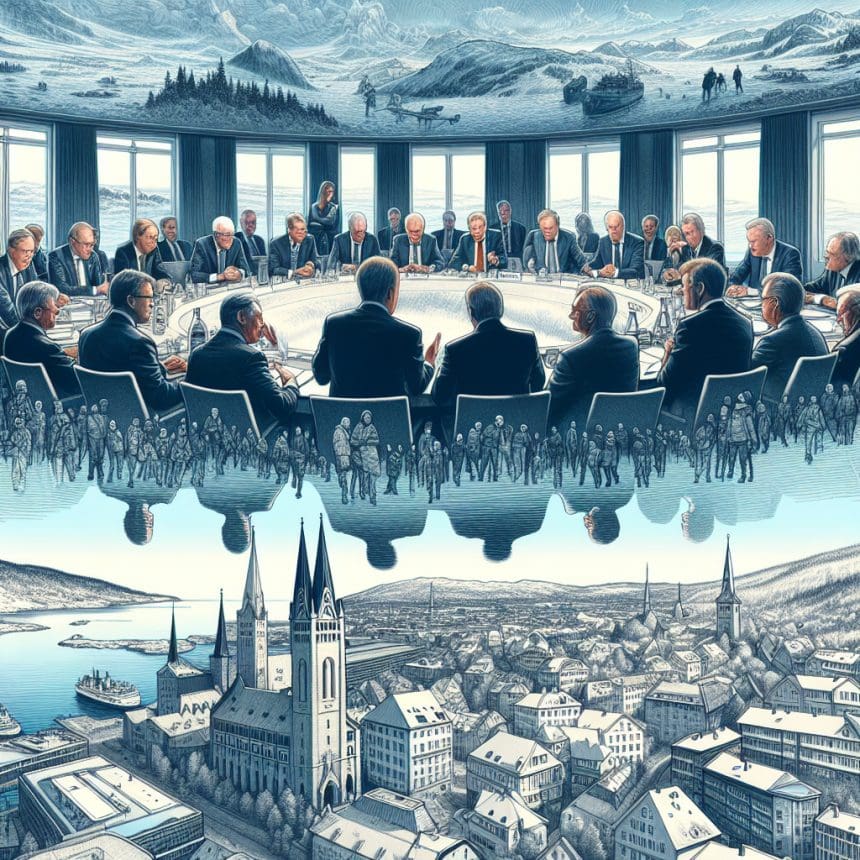
In a significant diplomatic meeting held in Oslo on October 2, 2023, leaders from Nordic countries convened to discuss rising tensions in the Arctic, particularly focusing on Greenland’s strategic role and Russia’s increasing presence in the region. Former Bank of England Governor Mark Carney joined the discussions, emphasizing the need for collaborative efforts to address geopolitical challenges and ensure sustainable development in the Arctic. The gathering underscores the urgency of forging a united front amid growing international interest in Arctic resources and navigational routes.
Rising Arctic Tensions: A Deeper Look
The Arctic has become a focal point for geopolitical maneuvering, especially as climate change opens up new shipping lanes and exposes untapped natural resources. Greenland, an autonomous territory of Denmark, is at the heart of these discussions, with its vast mineral deposits, including rare earth elements crucial for modern technology.
Russia’s military movements have raised alarms among Nordic leaders who fear that increased military presence could destabilize the region. Recent reports indicate that Russia has been ramping up its Arctic activities, further complicating an already tense situation. In response, Nordic states are seeking to strengthen collaborations and establish shared policies to ensure peace and stability.

Mark Carney’s Role in Arctic Diplomacy
Mark Carney’s involvement in the Oslo meeting adds a unique finance-oriented perspective to the gathering. Carney, a respected figure in global finance and climate economic policy, has been vocal about the importance of sustainable investment in Arctic development. His insights aim to balance economic opportunities in the region with environmental considerations.
“With Arctic temperatures rising faster than the global average, it’s crucial that we not only explore economic potentials but also commit to protecting this fragile ecosystem,” Carney stated during a keynote address. His emphasis on sustainability aligns with the growing consensus among Nordic countries that economic development must go hand-in-hand with environmental stewardship.
The Geopolitical Landscape: Who Stands Where?
Denmark, Norway, Sweden, Finland, and Iceland are united in their commitment to a peaceful Arctic. However, their perspectives on managing security issues differ. Denmark, with its historical ties to Greenland, is particularly focused on protecting the territory from external pressures, especially from Russia. Norway, with its current leadership in Arctic Council initiatives, emphasizes the need for strategic military readiness to safeguard its territorial waters.
Meanwhile, Sweden and Finland are keen on fostering a diplomatic dialogue, highlighting the importance of international treaties that govern Arctic affairs. They advocate for a multilateral approach to conflict resolution in response to Russia’s assertive tactics, including conducting military exercises near disputed areas.
Environmental Risks and Opportunities
The Nordic leaders underscored that addressing military posturing in the Arctic should not distract from pressing environmental concerns. The region is facing accelerated ice melt, which not only threatens local wildlife but also contributes to rising sea levels globally.
Experts warn that unchecked resource extraction could have catastrophic consequences for the delicate Arctic ecosystem. During the meeting, leaders agreed on the necessity of establishing stringent environmental regulations that would govern activities in the region, allowing for exploration and development while minimizing ecological impact.
Global Implications of Arctic Development
The meeting also addressed the global implications of Arctic development. As other nations, including China, express interest in the region, the potential for international conflict increases. Carney pointed out, “The Arctic is not just a Nordic issue; it is a global concern that necessitates collective action.”
The Nordic countries aim to leverage their geographical proximity and strategic alliances to mitigate risks associated with increased competition for resources. Ensuring that the Arctic remains a zone of cooperation rather than conflict is paramount for these nations.
Future Collaborations on Climate and Security
Looking ahead, the Oslo meeting set the stage for future collaborations between Nordic countries on climate and security. The leaders agreed to prioritize joint research initiatives focusing on sustainable development practices in the Arctic. Emphasis was placed on the importance of sharing intelligence and collaborative military exercises that bolster regional security efforts.
Further, they pledged to advocate for stronger international frameworks that would guide Arctic governance, aiming to create a comprehensive strategy involving all Arctic nations, including Russia. By approaching the Arctic’s challenges collectively, Nordic countries hope to mitigate potential conflicts while promoting shared economic opportunities.
Conclusion: A Call for Unity and Action
The Oslo meeting serves as a critical reminder of the intricate web of global relations tied to the Arctic region. As climate change alters the landscape, it presents both challenges and opportunities for the Nordic countries, who are now more united than ever in their approach.
In his closing remarks, Carney emphasized, “This is a pivotal moment for the Arctic. Let us seize the opportunity to ensure that economic aspirations do not compromise our responsibility to protect this irreplaceable part of our planet.”
As tensions rise and the Arctic landscape shifts, the need for unity, dialogue, and proactive measures becomes increasingly crucial. The outcomes of this gathering in Oslo will ripple beyond the Nordic countries, shaping the future of Arctic diplomacy and cooperation for generations to come.